Introduction
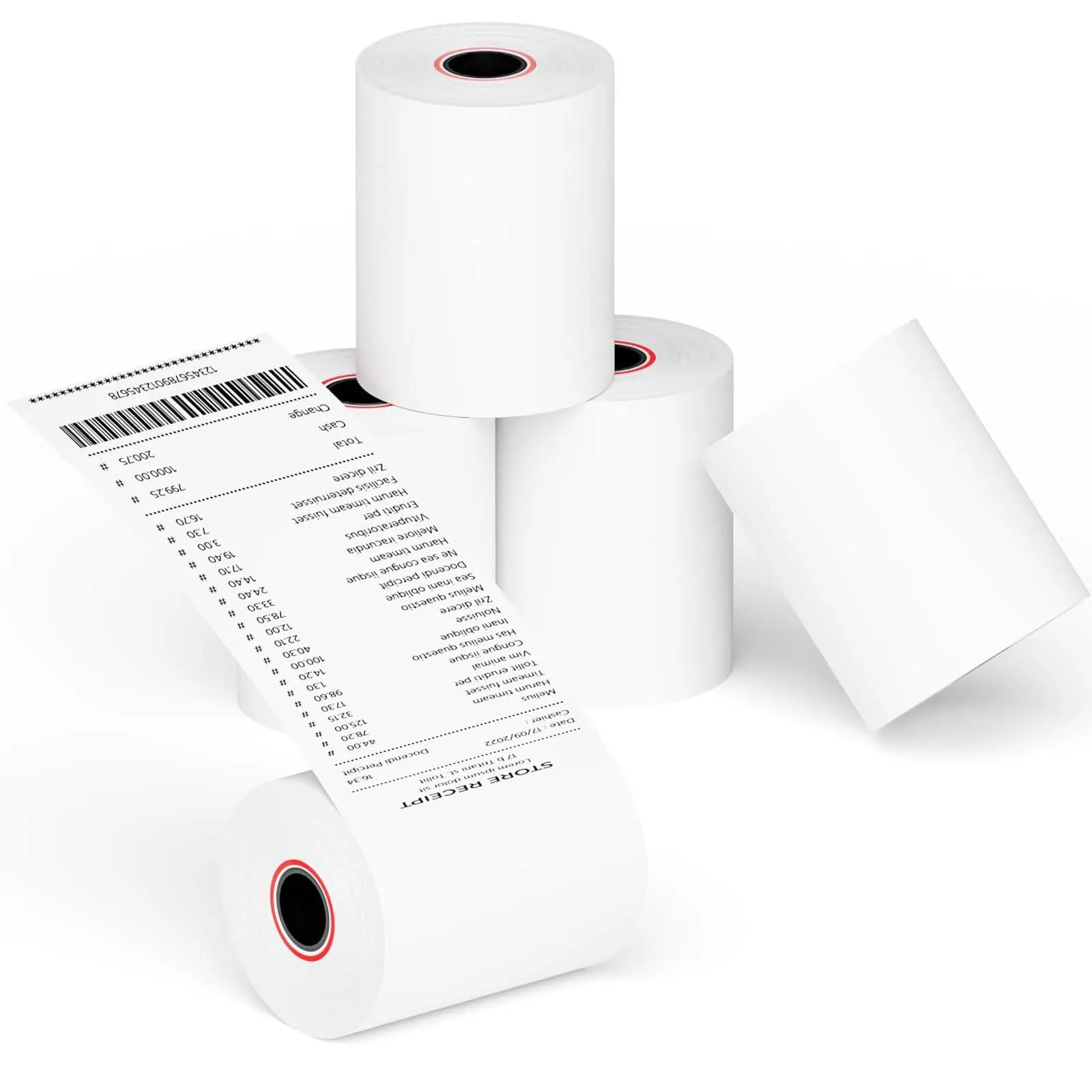
Every day, we use thermal paper in supermarkets, restaurants, banks, logistics labels, and many other places. However, most people rarely think about the paper behind these printed records. Unlike ordinary printing paper, thermal paper relies on a special thermal coating to create images through heat. The quality of the base paper and coating directly affects printing clarity, durability, and user experience.
Here are 5 common questions about thermal paper that many people may not know.
Many people have experienced this: a receipt looks clear when it is first printed, but after several months, the text becomes lighter or disappears. The reason is that thermal paper is not printed with traditional ink. It contains a heat-sensitive coating that reacts to heat from the thermal printer head.
Factors such as:
These factors can affect the stability of the thermal coating and cause printed images to fade. For applications requiring longer storage, such as medical records, logistics labels, and business documents, choosing high-quality thermal paper with stable coating performance is essential.
2. Why Do Some Receipts Feel Smooth While Others Feel Rough?
When touching different receipts, you may notice that some feel smooth and glossy, while others feel rough or uneven.
This difference comes from:
Surface coating quality
Base paper smoothness
Manufacturing technology
A high-quality thermal paper surface allows better heat transfer during printing, resulting in clearer images and smoother operation.
Poor-quality thermal paper may cause uneven printing, paper dust, or reduced printer performance.
3. Why Are Some Prints Clear While Others Look Faint?
Sometimes the same thermal printer produces different printing results. One receipt is dark and clear, while another looks light and difficult to read. The reason is not always the printer.
Thermal printing performance depends on:
High-quality thermal paper provides stable color development and consistent printing results, helping businesses reduce printing problems.
4. Why Do Some Thermal Papers Curl or Deform Easily?
Paper flatness is important for smooth printing and processing.
Thermal paper may curl because of:
For high-speed printers and automatic labeling equipment, good dimensional stability ensures smoother operation and reduces paper jams.
5. Why Do Banks and Logistics Companies Require Better Thermal Paper Quality?
Thermal paper is widely used for:
In these applications, printed information often needs to remain readable for a long time. A faded barcode, unclear tracking number, or missing transaction record can create inconvenience and additional costs.
Therefore, industries with strict requirements usually choose thermal paper with:
Choose Reliable Thermal Paper for Better Printing Performance
Although thermal paper looks simple, its performance depends on advanced coating technology and strict manufacturing control. China Paper provides thermal paper solutions with consistent quality, excellent printing performance, and reliable supply for different applications. From retail receipts to logistics labels, choosing the right thermal paper helps businesses achieve clearer printing, smoother operation, and longer-lasting records. Contact China Paper for professional thermal paper solutions.
 English
 français
 Deutsch
 Español
 italiano
 русский
 português
 tiếng việt
 Türkçe
 العربية
 Indonesia